
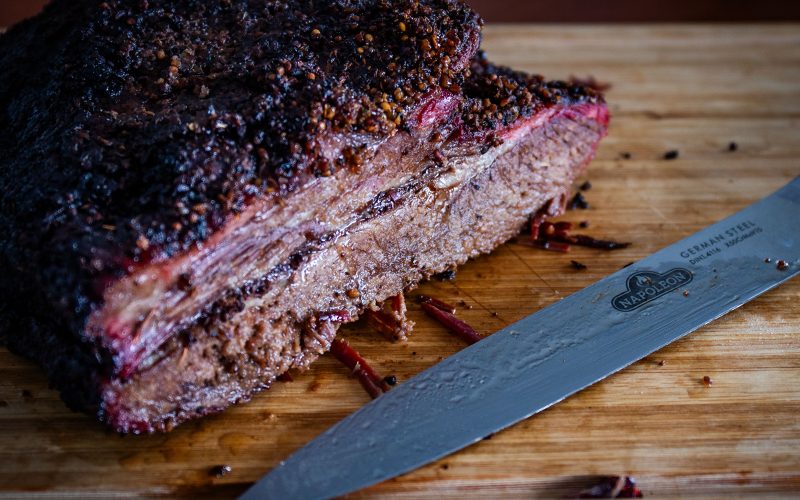
Mastering the art of barbecuing a beef brisket is a journey for any backyard grilling enthusiast. But before you fire up your smoker for your brisket recipes and unleash that delicious smoky goodness, there’s an important step that often trips up even seasoned grill masters: how to trim beef brisket. This crucial step can be the difference between a juicy, flavorful brisket and a dry, tough disappointment. So, let’s fire up the grill knowledge and break down how to trim a brisket like a pro.
Understanding Your Brisket: The Point, The Flat, and the Fat
A brisket has two main muscles: the point and the flat. The point muscle, thicker and marbled with fat, yields those coveted burnt ends. The flat sits below the point, a leaner cut that slices beautifully for those classic brisket sandwiches.
Then there’s the fat. There’s the fat cap, a thick layer that renders down during the cooking process. Underneath you’ll find hard fat, the white chunks that need to be trimmed. Finally, we have silverskin. That’s the thin, white membrane on the meat’s surface.
Why Trimming Is Key
Trimming a brisket ensures that your seasoning and smoke can properly penetrate the meat, ultimately resulting in maximum flavor. Excess fat can also prevent proper bark formation, that delicious, crispy outer layer every pitmaster craves.
A well-trimmed brisket cooks more evenly and has less waste. By trimming hard fat that doesn’t render well during cooking you also end up with a better-looking final product. Properly trimming your brisket is one of the most important steps to cooking the perfect brisket.
Essential Tools for Trimming Brisket
First and foremost you will need a large, sharp cutting board since you are working with a rather large piece of meat. A large wooden cutting board is a great option for this. For more precise cuts, use a boning knife. I absolutely love this Shun Classic Boning and Fillet Knife. When I’m handling raw meat, I use nitrile gloves to help me grip the meat better – Nitrile Gloves.
Once you have all the tools gathered it’s time to get to work trimming your brisket.
Getting Started With How to Trim Beef Brisket:
Step 1: Prep Your Workspace:
Set out your cutting board. Ensure you have enough space. Make sure your brisket is cold as a cold brisket is much easier to work with than one that’s warmed up.
Step 2: Examine Your Brisket:
Pat the brisket dry using paper towels. Take note of the fat cap’s thickness and identify areas of hard fat. If you need help with your brisket prep, there are plenty of great brisket resources available online, like the Food Network.
Trimming Your Brisket:
Step 1: The Fat Cap:
Some pitmasters like a thicker fat cap, others prefer a thinner one. Trim it down to about ¼ inch, leaving a nice even layer. This allows the seasoning to penetrate the meat but still provides ample fat for rendering.
Step 2: Targeting the Deckle Fat
Turn your attention to the thick layer of hard fat, or deckle fat, on the underside of your brisket. Trim this fat down considerably. Use your fingers to feel for the hard fat and angle your knife to remove it without taking off too much meat. Remember, we’re aiming for about ¼ inch of flat fat left on the meat.
Step 3: Addressing the Edges
These thinner parts tend to cook faster, so trim off any overhanging pieces that look like they will burn. You can even trim them down to match the overall thickness of the brisket for more even cooking. This will also help prevent brisket burnt ends.
Step 4: Remove the Silverskin:
While you can skip removing the silverskin, it can make the brisket tough and prevent the rub from penetrating the meat. Carefully slide your knife under the membrane and peel it away.
What to Do With Your Brisket Trimmings
Those trimmings aren’t trash. You can render down the fat to make beef tallow for frying, searing, and baking. Grind the meat trimmings for burgers, tacos, or even a hearty brisket chili. People love brisket, so use as much of it as you can.
Save that excess fat. Rendered beef fat (tallow) is making a comeback. Use it for frying, sautéing, and even baking, just like they did in the old days. Your kitchen (and your taste buds) will thank you.
Grind up those extra meat scraps and toss them into your next batch of burgers. Trust me; you’ll thank me later. It adds an unbelievable depth of flavor.
FAQs About How to Trim Beef Brisket:
What is the best way to trim a brisket?
The best way to trim brisket is to use a sharp boning or filet knife and trim away excess fat and silverskin, leaving about a quarter inch of fat cap for flavor and moisture. When you start trimming, pay attention to the grain of the meat and trim accordingly.
Is it OK to trim all the fat off a brisket?
No, you should not remove all the fat from your brisket. Fat equals flavor and moisture. Trimming brisket fat is a crucial step in the brisket trimming process, but be careful to not trim too much.
What is the 3 2 1 rule for brisket?
The 3-2-1 method is a smoking technique, not a trimming method, but it refers to smoking the brisket for 3 hours, wrapping it in butcher paper, and then cooking for 2 more hours. After that, it rests for 1 hour. The 3 2 1 rule for brisket is a great starting point, but many pitmasters modify it to their liking.
What part of the brisket do you cut off?
Remove excess fat, especially hard fat, and the thin membrane known as the silverskin. When trimming brisket, make sure to use a sawing motion with your knife for best results.
Conclusion
Knowing how to trim beef brisket is a game-changer. Don’t let this step intimidate you. Trimming a brisket might seem daunting at first. However, by understanding the why and the how, you’re setting yourself up for barbecue success.
With practice, a keen eye, and a little confidence, you’ll become a brisket-trimming master. So grab that brisket and a sharp knife because there are some happy taste buds waiting for your delicious creations. Now that you know how to trim a brisket, it’s time to get cooking.